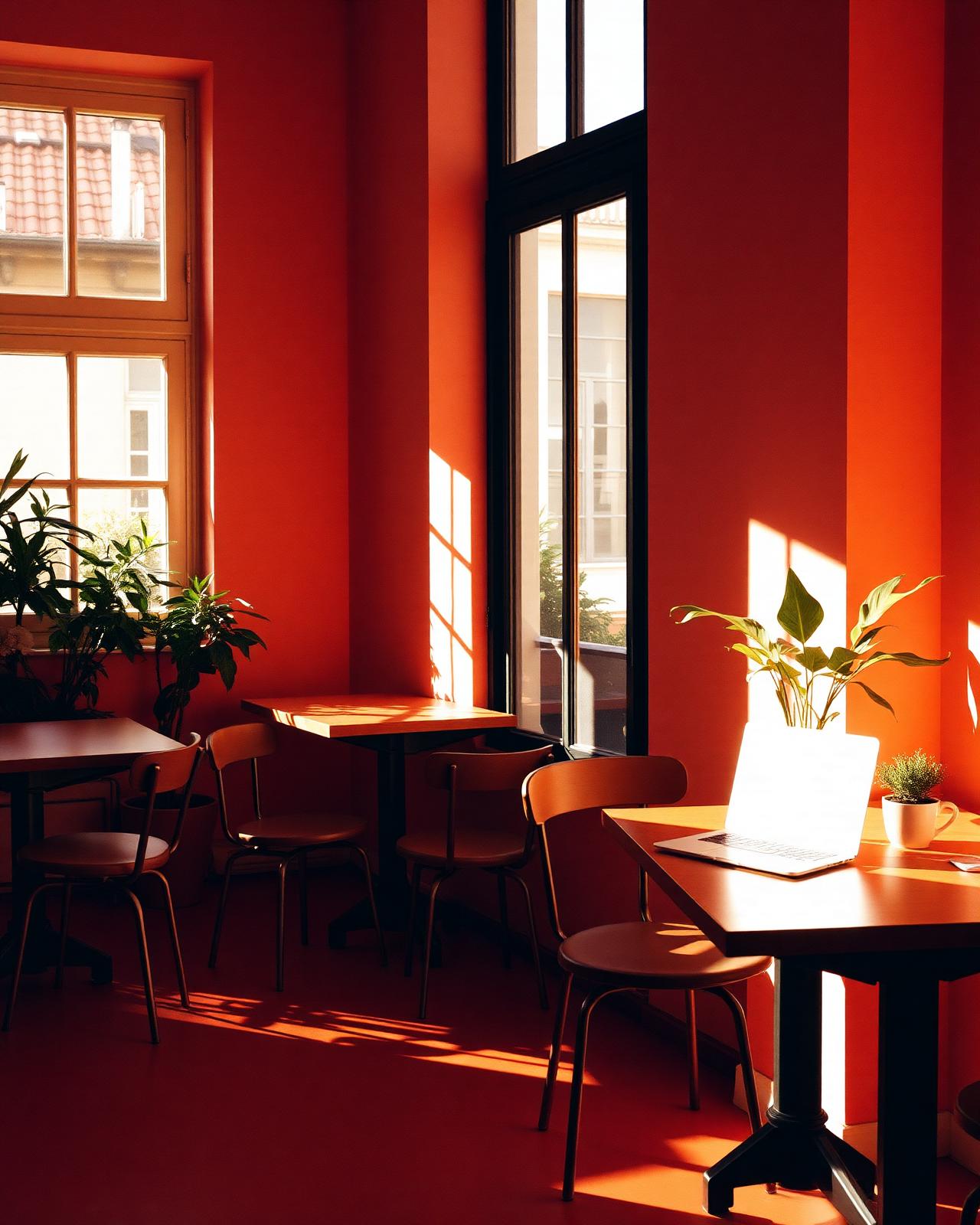
Every year a different city is anointed the capital of remote work, and every year a few thousand people arrive to discover the cafés are full, the rent has doubled, and the neighbourhood association is tired of strangers in linen shirts taking calls on the stairs. The cities below are the five that, in 2026, still actually work — provided you arrive without illusions. Each one is good at something specific, and bad at something else. The honest answer is not which is the best, but which is the best for you.
This guide is written for remote workers planning two to three months in one base rather than one week in five different countries. It is a city audit, not a brochure: atmosphere, what each place does well, and where the friction lives.
In this story
- Lisbon, Portugal — the polished European default
- Mexico City, Mexico — the cultural heavyweight
- Chiang Mai, Thailand — the long-stay laboratory
- Medellín, Colombia — the spring-climate workshop
- Cape Town, South Africa — the seasonal escape
- How to choose one (and stop comparing)
- Setup checklist, carry-on, and the weekly rhythm
Lisbon, Portugal
The atmosphere
Tiled facades, trams that screech up impossible hills, and a soft Atlantic light that flatters every café terrace. Lisbon's remote-work scene now lives mostly between Príncipe Real, Santos, and the river — quieter, leafier, and more residential than the central tourist core. The romance is real. The bandwidth tests at 7 a.m., as you take a New York call from a fourth-floor walk-up with a single decorative lamp, are also real.
The good
- Fast, stable fibre internet in most newer apartments and almost every coworking space.
- Compatible time zone with both London and the US East Coast for the first half of the day.
- Wide, mature coworking ecosystem with quiet phone booths and outdoor terraces.
- Genuinely safe to walk home at night in most central residential areas.
The bad
- Long-stay rents have doubled in five years; under €1,500/month for a one-bedroom is now rare in central districts.
- Older buildings are damp and cold from November to March, with very limited heating.
- The remote-work crowd is large enough to feel like an English-speaking enclave if you are not careful.
- Restaurant kitchens close early; late evening work shifts mean dinner from a supermarket.
Mexico City, Mexico
The atmosphere
Jacaranda trees over Roma Norte, tortillerías that open at dawn, and a creative class that was here long before remote work arrived. Mexico City is the most culturally serious city on this list — galleries, restaurants, theatre, music, all running independently of the nomad scene. You can spend a year here and barely meet another remote worker if you choose your neighbourhoods well.
The good
- Fast fibre internet in Roma, Condesa, Juárez, Polanco, and most of Coyoacán.
- Central Time aligns beautifully with US working hours.
- Coworking spaces are large, well-equipped, and rarely fully booked in shoulder seasons.
- World-class food at every price point, including small meals at midday that protect deep work in the afternoon.
The bad
- Altitude (2,240 m) flattens the first ten days for almost everyone arriving from sea level.
- Air quality during the dry pre-rainy season (March–May) is poor enough to disrupt sleep and exercise.
- Traffic and rain can turn a thirty-minute commute into ninety; choose accommodation close to your coworking.
- Tourist-area pricing on Roma and Condesa rentals has crept aggressively upward.
Chiang Mai, Thailand
The atmosphere
Slow scooters, temple bells, and a long, mature remote-work ecosystem that predates the word 'nomad'. Chiang Mai is unfashionable now, which is precisely its quiet advantage. The infrastructure for monthly stays is older and steadier than almost anywhere else: cheap, clean apartments, twenty-four-hour coworking spaces, and a community that does not need to perform itself.
The good
- Cost of living that allows a comfortable monthly budget under $1,500–$2,000 including coworking.
- Reliable fibre internet in almost every modern condo building.
- Coworking spaces that genuinely open at 8 a.m. and stay open past 10 p.m.
- A long-stay culture: monthly leases, monthly gyms, monthly laundry — friction-free month two.
The bad
- Burning season (roughly February to April) produces some of the worst urban air on the planet.
- Time zone is unforgiving for US clients: most calls land between 8 p.m. and midnight local time.
- Footpaths are sparse and walkability is poor; you will rent a scooter or take rideshares constantly.
- Long-term it can feel intellectually quieter than larger capital cities.
Medellín, Colombia
The atmosphere
Eternal spring in a green valley, cable cars climbing into the hills, and a city visibly rebuilding its idea of itself. Medellín has become a serious remote-work hub in the last three years, mostly anchored in El Poblado and Laureles. The energy is younger and more social than Lisbon, more curious than Chiang Mai, and considerably easier on the body than Mexico City.
The good
- Climate of 18–24°C year-round means no heating, no cooling, no real seasonal disruption.
- Strong fibre internet across Poblado and Laureles, with multiple modern coworking spaces.
- Same time zone as New York for half the year — almost no schedule pain for US-aligned work.
- Active health and gym culture; running tracks, yoga, and football leagues are easy to join.
The bad
- Petty theft and phone snatching are genuine concerns in some neighbourhoods after dark.
- El Poblado has become noisy and expensive; the once-quiet streets now host loud bachelor tourism.
- Spanish is essential outside the central bubble; even ordering a SIM card without it is harder than it should be.
- Healthcare quality varies sharply by clinic; choose insurance that names hospitals, not just cities.
Cape Town, South Africa
The atmosphere
Table Mountain on one side, two oceans on the other, and a December-to-March summer that lines up almost too perfectly with European winter. Cape Town is a seasonal city: brilliant for a remote-work stay between November and April, less obvious the rest of the year. Sea Point, Green Point, Tamboerskloof, and the City Bowl are where most remote workers cluster.
The good
- Stunning landscape that genuinely improves daily morale — sunrise over the mountain is not a cliché.
- Strong English-speaking professional services and well-run coworking spaces.
- Cost of living that, even after recent inflation, remains lower than European capitals.
- Vibrant food, wine, and arts scene with a serious creative class.
The bad
- Loadshedding (scheduled power cuts) still happens; any apartment without a battery backup is a daily gamble.
- Crime forces meaningful precautions: no walking at night in many areas, no phone in hand at traffic lights.
- Distances are wide; without a car some neighbourhoods feel cut off from coworking and social life.
- Winter (June–August) is wet, cold, and surprisingly hard on apartments built for sun.
How to choose one (and stop comparing)
The honest filter is not which city is most beautiful in photographs. It is which time zone respects your working hours, which climate respects your body, and which neighbourhood lets you walk between sleep, work, and dinner in under thirty minutes. After that, choose the city whose language you are willing to take at least one quiet lesson in. The cities that disappoint remote workers are almost never the cities themselves; they are the ones chosen for the wrong reason.
Setup checklist before you book a month
- Two or three coworking day passes purchased before committing to a monthly membership
- Apartment booked for one week first, then extended once the area is tested at your real working hours
- Local SIM or eSIM with reliable data, not airport Wi-Fi for week one
- Encrypted cloud backup of documents and a hard drive backup of work files
- Insurance that explicitly covers work equipment and emergency healthcare in the country
- One weekly day off marked in the calendar before you arrive
Essential carry-on setup
- Laptop, charger, and adapter in carry-on, never in checked luggage
- Hard drive or encrypted USB with critical backups
- Compact noise-cancelling headphones for shared spaces and night flights
- One smart layer suitable for on-camera client calls
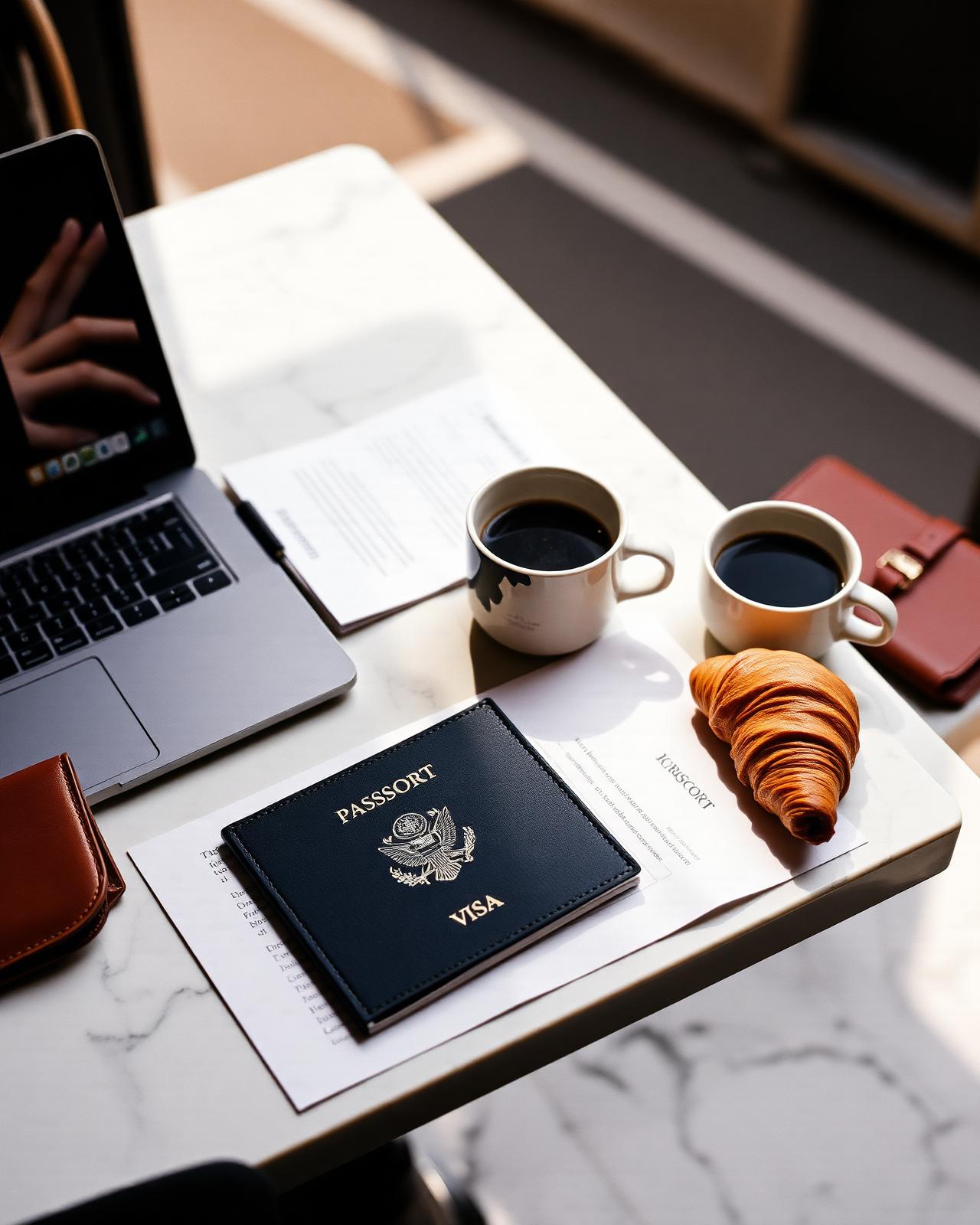
- Printed proof of accommodation and visa documents
Recommended bag size
For a stay of one to three months, a 40-liter carry-on plus a 20-liter laptop backpack is enough if laundry is available. Add one fabric folder of paperwork and a slim pair of running or walking shoes. Anything else can be bought locally and probably should be.
The weekly rhythm that protects long stays
Choose one neighbourhood for sleeping, one for working, and one for evenings — and keep the distance between them under thirty minutes. The cities that work best for remote life are not the most exciting on paper; they are the ones where these three zones overlap. Add one local class (language, cooking, climbing), one fixed weekly long walk, and one evening where the laptop never opens. Two months passes very differently in a city where you have rituals than in one where you only have a desk.
Common mistakes to avoid
- Choosing a city only because it photographs well on the platform you use most
- Ignoring climate, altitude, or air quality during your actual working hours
- Living entirely within an English-speaking nomad bubble for the whole stay
- Renting cheap apartments with no real desk, no natural light, or no heating
Questions, answered
Frequently asked
Which of these cities is the cheapest for a three-month stay?
Chiang Mai remains the cheapest by a comfortable margin in 2026, followed by Medellín. Lisbon and Cape Town are now closer to European mid-tier pricing than the bargains they were five years ago.
Which is best for US-aligned working hours?
Mexico City and Medellín, which sit in or near US Central and Eastern time. Lisbon works well for the first half of a US East Coast day. Chiang Mai and Cape Town demand evening or early-morning calls.
Is Cape Town safe enough for a long remote-work stay?
Yes, with adjustments: live in Sea Point, Green Point, Tamboerskloof, or the City Bowl; do not walk alone at night; use rideshares rather than waiting at unlit stops; choose an apartment with battery backup for loadshedding.
How long should I stay in a city to know if it works for me?
Three to four weeks is the honest minimum. The first week is logistics. The second is novelty. The third is when the city's real rhythm — its noise, its weather, its weekday traffic — starts to tell you the truth.
Conversation
Be the first to comment
Comments are reviewed automatically before they appear. Please keep it respectful.
Loading comments…