Silence in Tokyo is a designed product. It does not occur by accident, and it certainly does not occur in Aoyama, a district of luxury boutiques and four-lane avenues that runs on the metabolism of a much larger city. And yet, two minutes from the chaos of Omotesando, behind a door that bears no signage, a new hotel has succeeded in manufacturing a silence so total that arriving guests instinctively lower their voices.
The hotel — small, expensive, almost stubbornly anonymous — is the most interesting thing to happen to Tokyo hospitality in years. It is also a useful case study in what hospitality can mean when stripped of its usual signals.
The shokunin approach
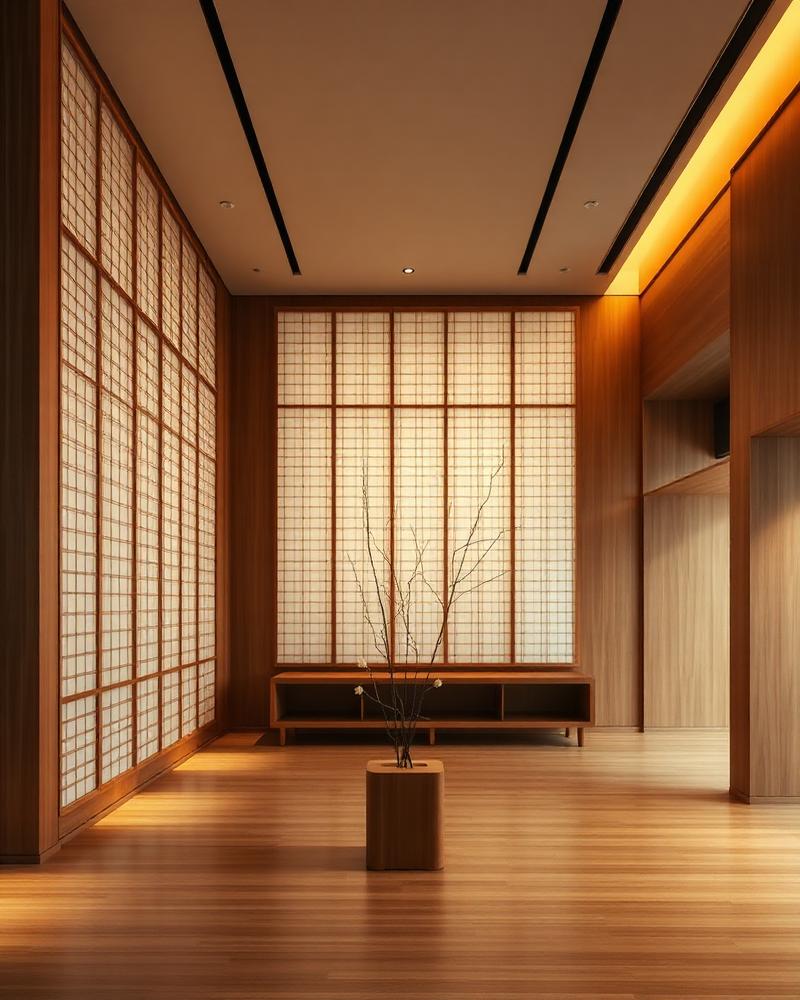
Every detail in the building is the work of a craftsperson. The shokunin tradition — a word that translates loosely as artisan but carries the moral weight of vocation — runs through the project from the lobby to the towels. The paper of the screens was made by hand in a small workshop outside Kyoto. The angle of the lobby bench was decided after a week of mock-ups. The weight of the front door was calibrated so that it would close softly even when pushed hard.
This is the texture of the hotel: a thousand small decisions, none of which announce themselves. The result is a building that is paradoxically harder to describe than a more decorated one. There is no chandelier to point at. There is no signature scent. There is, simply, the absence of the usual irritations.
What a room actually contains
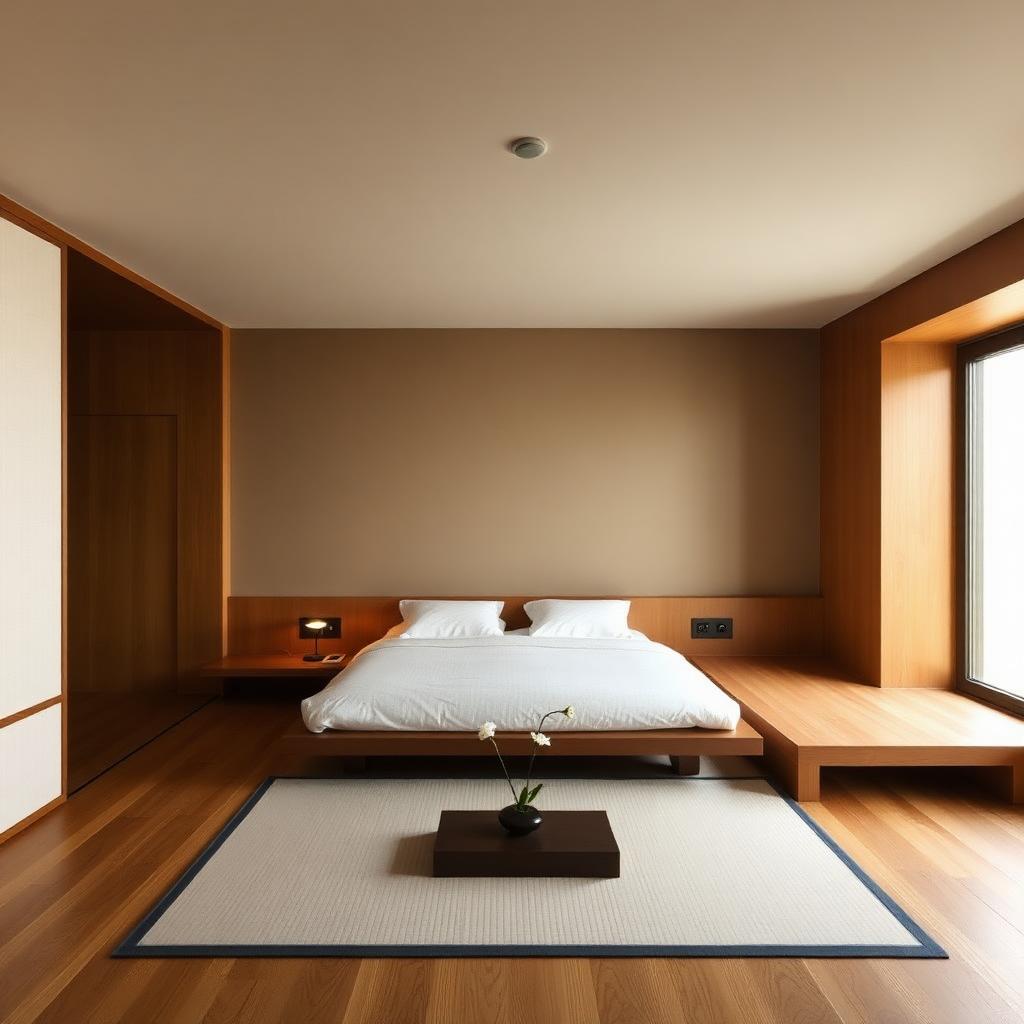
The smallest rooms are 26 square meters, which by Tokyo standards is generous. The walls are an unpainted plaster the color of unbleached linen. The platform bed sits low to the floor and is dressed in a single white cover that is changed daily. There is a low cedar bench by the window, a single brass reading lamp, and a slim wardrobe behind a sliding shoji screen. The desk is the windowsill.
The minibar is a small chilled drawer with two bottles of local water, replaced silently while you are out. The bathroom is the only place the budget shows: a single block of grey stone for the bath, brass fittings cool to the touch, and a shower the size of the wardrobe in many European hotels. Everything in the room is in proportion to itself. Nothing is overscaled to impress.
"Hospitality, at its best, is the absence of friction. Our work is the work of subtraction."
— The hotel's general manager
Service that does not perform
Tokyo's better hotels have long understood that the highest form of service is the one you do not notice. This property takes the idea further than any I have stayed in. There is no check-in desk. A staff member meets you at the door, shows you to a quiet seat, brings tea, and processes your arrival on a tablet while you drink it. The room key is handed over inside a small linen envelope.
Throughout the stay, the same pattern repeats. The turn-down service happens during dinner. The breakfast tray arrives within thirty seconds of the requested time. A note left for a forgotten umbrella the night before produces, by morning, a borrowed one waiting by the door, with no commentary.
The lobby as living room
There is a lobby, but it does not behave like a lobby. The room is the size of a generous apartment. The center is occupied by a low oak table and four armchairs covered in dark wool. Behind them, a single ikebana arrangement sits on a stand. A small bar at the back serves espresso during the day and a short list of natural wines at night. There is no music.
Guests use the space the way a Tokyo apartment uses its living room: briefly, quietly, and rarely all at once. Reading is the default activity. Conversation, when it happens, is at the volume of two people in a library. The room expects this without policing it. Most guests, after the first hour, find themselves matching the cadence without being asked.
What it costs, and what it is worth
The rates are not modest. A base room is roughly twice what a four-star international chain charges three blocks away. The hotel is also smaller than almost any of its competitors, with fewer than thirty rooms in the building. Both facts are deliberate. The economics of restraint require either fewer rooms or higher prices, and the hotel has chosen both.
Whether it is worth it depends on what you value. If a stay is judged by the number of amenities, the answer is straightforwardly no. If it is judged by the quality of sleep, the texture of breakfast, and the ratio of hours spent calm to hours spent stressed, the answer turns differently. For travelers passing through Tokyo for two or three days between longer journeys, the case is strong.
How to use a hotel like this
- Plan less. The point of a quiet room is to make the city feel manageable; over-scheduling defeats it.
- Eat one breakfast in, one breakfast out. The in-room version is worth experiencing once; after that, the neighborhood cafés are better.
- Use the lobby as a working room for a morning. The acoustics and the lighting are designed for it.
- Walk back at night, even if you are tired. The arrival through the unmarked door, twice, is one of the small pleasures of the stay.
By the end of a long stay, the hotel has done its real work. The silence stops feeling like a feature and starts feeling like a baseline. You begin to expect doors to close softly. You begin to notice when restaurants in other neighborhoods are louder than they need to be. The standard, once raised, is difficult to lower. That, in the end, is what good hospitality leaves behind — not a memory of grandeur, but a quietly recalibrated sense of what a room ought to feel like.

Conversation
Be the first to comment
Comments are reviewed automatically before they appear. Please keep it respectful.
Loading comments…