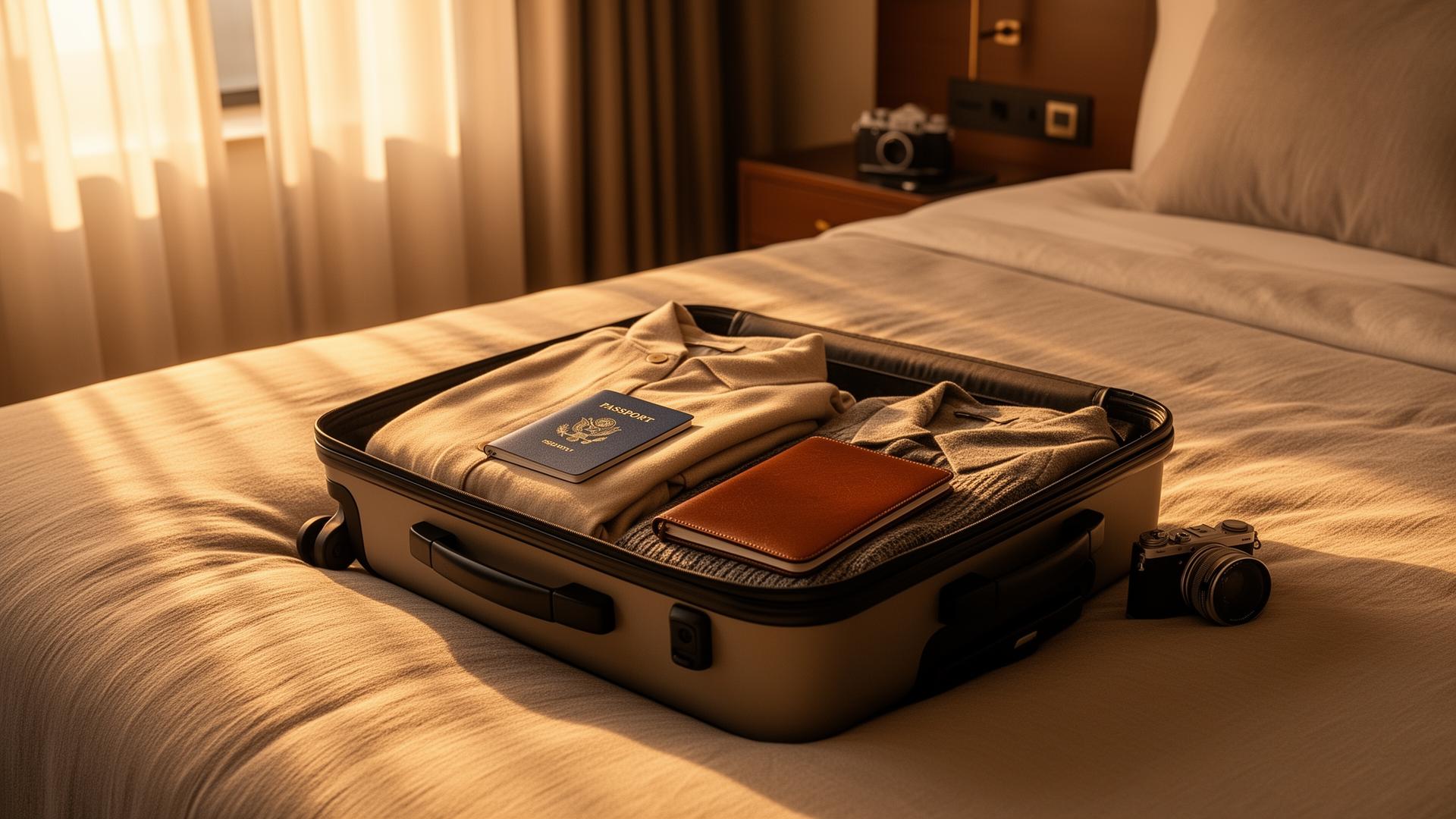
A reliable carry-on packing system is not about making travel look effortless from the outside. It is about removing the small points of friction that make good trips feel scattered: the cable you cannot find at the gate, the jacket that works in the taxi but not after sunset, the bag that fits the airline rule but not the rhythm of a real day. The best travel tips are rarely dramatic. They are quiet systems, repeated until the trip has room to become memorable.
This guide was written for travelers who want ten days of polished outfits without checking a bag. It combines editorial restraint with the practical details searchers actually need before they leave: what to pack, how to organize it, what bag size works, what to avoid, and how to move through the first twenty-four hours without losing the calm you came to find.
Why this travel tip matters
Most bad travel days begin before the journey does. They begin with overconfidence, a vague packing list, or an itinerary built around someone else's tolerance for rushing. A premium trip is not always the most expensive one; it is the one in which your essentials are where they should be, your energy is protected, and your decisions are made before the pressure arrives.
The goal is not minimalism as performance. The goal is usefulness. Bring fewer things, but make each one earn its place. Plan less aggressively, but plan the first and last hour of every travel day carefully. Leave space in the schedule for weather, hunger, and the ordinary human delays that glossy itineraries pretend do not exist.
Quick Packing Checklist
- Three tops that work with every lower layer
- Two trousers or skirts in dark, wrinkle-resistant fabrics
- One merino or cashmere layer for planes and cool evenings
- One compact rain shell or tailored overshirt
- One pair of broken-in walking shoes plus one slim evening shoe
- Laundry sheets, stain wipe, and a small folding tote
- Documents, medication, chargers, and valuables in the personal item
Essential Carry-On Setup
Your carry-on should behave like a small, mobile apartment: documents in one pocket, power in one pouch, comfort in one layer, and valuables never more than an arm's length away. If you have to open the main compartment in public to find something urgent, the system is not finished.
- Top pocket: passport, pen, printed address, and boarding documents
- Small pouch: cable, plug adapter, battery, SIM tool, and earbuds
- Soft pouch: eye mask, socks, lip balm, hand cream, and medication
- Flat folder: one refined dinner layer that should not crease
- Side pocket: empty water bottle and sunglasses
Recommended Bag Size
Choose a 35–40 liter cabin suitcase or soft-sided carry-on under 55 × 40 × 23 cm, paired with one slim personal item. That range is large enough for ten days if you repeat layers and small enough to lift into overhead bins without negotiation.
The practical routine
Pack by outfit function, not by item category. Build around two travel-day outfits, three dinner-capable tops, one soft layer, one weather shell, and shoes you have already walked in for an entire afternoon.
- Lay every item on the bed and remove anything that only works with one outfit.
- Pack the heaviest pieces at the wheel end so the case stands cleanly.
- Roll soft knits, fold structured pieces, and keep the first-night outfit at the top.
- Photograph the final layout so repacking takes five minutes on the last morning.
Common mistakes to avoid
The fastest way to make a trip feel cheap is not choosing the wrong hotel. It is ignoring the small logistics that create stress in public: overweight bags, dead phones, missing addresses, shoes that punish you after lunch, and arrival plans that depend on perfect Wi‑Fi.
- Packing new shoes because they look better than the pair you trust
- Bringing separate outfits for every possible mood
- Forgetting that toiletries and souvenirs need space on the return
- Using a beautiful bag that becomes heavy before the taxi arrives
How to make it feel premium
Premium packing is tactile and quiet: a neutral palette, a fabric pouch system, one excellent notebook, one scent-free laundry routine, and clothes that can sit in a cafe, gallery, train carriage, and dinner room without announcing themselves.
The luxury is not in carrying expensive objects. It is in never needing to unpack your whole life to solve a small problem. A good system turns the airport, train platform, hotel lobby, or unfamiliar street into a place you can move through with composure. That composure is what other travelers mistake for style.
Questions, answered
Frequently asked
What is the most important rule for a reliable carry-on packing system?
Keep the system simple enough to repeat under pressure. If a packing or planning method only works when you are relaxed at home, it will fail in the airport, station, or hotel lobby.
How big should my travel bag be?
Choose a 35–40 liter cabin suitcase or soft-sided carry-on under 55 × 40 × 23 cm, paired with one slim personal item. That range is large enough for ten days if you repeat layers and small enough to lift into overhead bins without negotiation.
Should I travel with only a carry-on?
For trips under ten days, yes when laundry is possible. A carry-on saves time, reduces lost-luggage risk, and forces better editing. For formal events, winter equipment, or family travel, checked luggage can still be sensible.
How do I make travel feel more luxurious without spending more?
Protect sleep, reduce bag weight, book slower connections, arrive with local currency and offline maps, and leave one unscheduled block each day. Calm is the most reliable form of luxury.
Conversation
Be the first to comment
Comments are reviewed automatically before they appear. Please keep it respectful.
Loading comments…