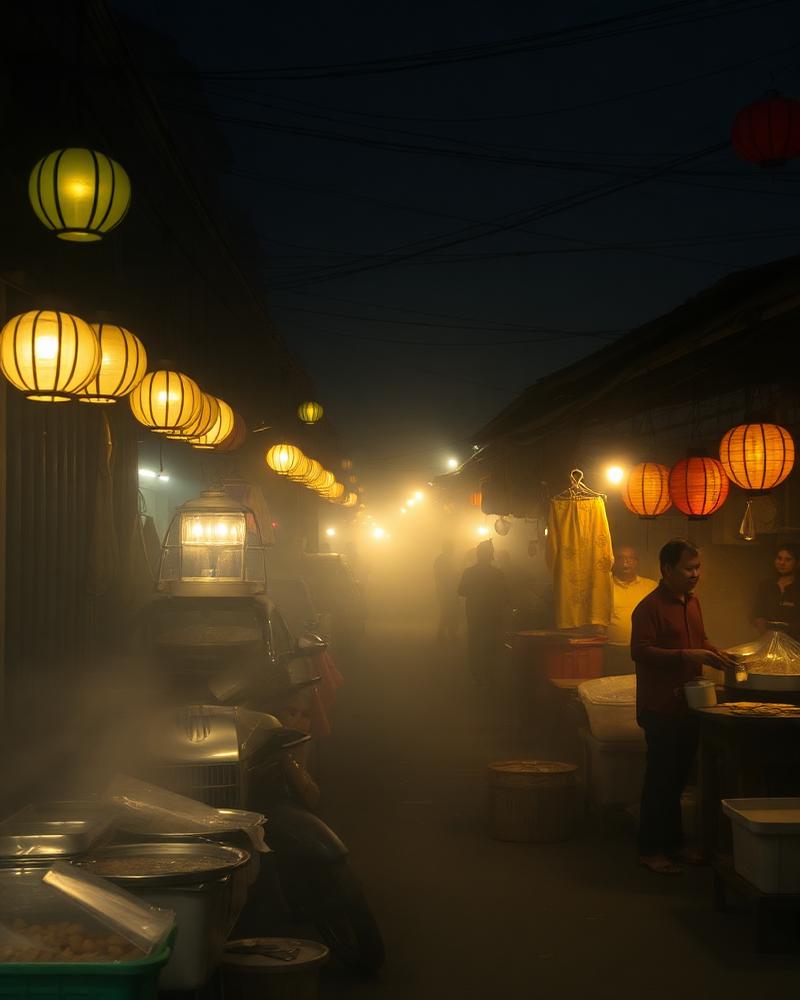
At five in the morning, the fog lifts off the Saigon River and the women who have been here longer than any of us begin to set up their carts. The blue plastic stools come out first, then the low aluminum tables, then the wide enameled bowls that will hold the day's broth. By six, the first customers are seated — motorbike couriers, market porters, schoolteachers on their way to work — and the city has begun to eat.
Saigon, more than any other city in Southeast Asia, has built its identity around this morning ritual. To understand the city, you have to understand its breakfast. And to understand the new Saigon — the one that has emerged in the last five years, after the long quiet of the pandemic — you have to understand what its breakfast is becoming.
Pho, reconsidered
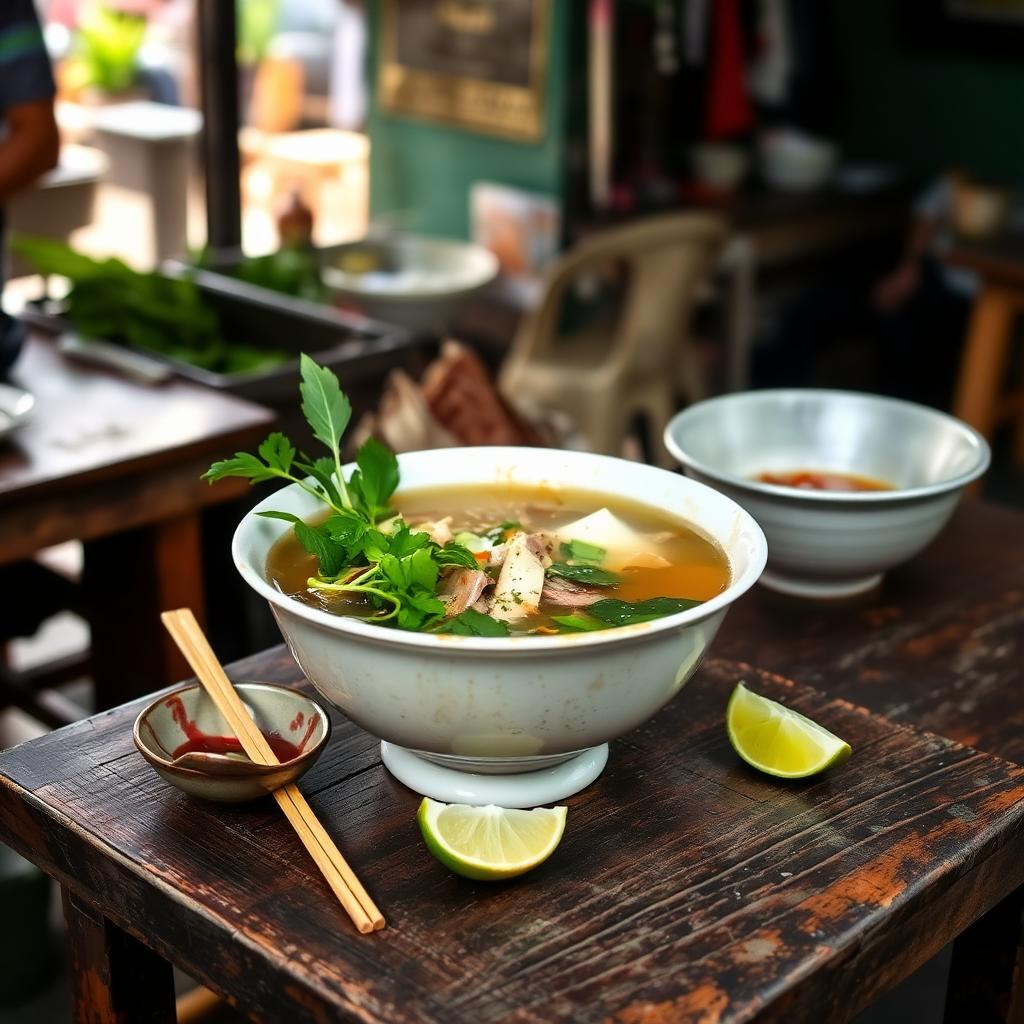
The young cooks of District 3 are not abandoning tradition. They are arguing with it — politely, in the kitchen, over twenty-four-hour simmered broths. The new wave of pho parlors look nothing like the old ones. The stools are wooden. The lighting is warm. The menu is short and printed on a single card. But the bowl, when it arrives, is recognizably the same one their grandmothers served.
What has changed is the rigor. The bones are roasted before they are simmered. The aromatics are toasted dry in a pan before they enter the pot. The fish sauce is sourced from a single family-run producer on Phu Quoc. The herbs come from a farm cooperative outside the city that delivers twice a day. The result is not a fusion. It is the same dish, cooked with the assumption that every step matters.
The banh mi renaissance
If pho is the morning ritual, banh mi is the lunchtime answer. The sandwich has been Saigon's gift to the world for half a century, but for most of that time it has been treated as cheap, convenient, and therefore unworthy of attention. The new generation of banh mi cooks have rejected that framing entirely.
Walk through District 1 and you can now find banh mi shops that bake their own bread from scratch each morning, cure their own pâté, and pickle their own daikon and carrot two days in advance. The price has crept up — fifty thousand dong instead of twenty — but the bread shatters the way good baguette should, the pâté is the color of autumn, and the herbs are still cut to order. It is the sandwich its inventors would recognize, made with more attention than the original ever received.
Markets, not menus
The best way to understand what is happening to Saigon food is to skip the restaurants altogether and spend two mornings in a working market. Ben Thanh is a tourist photograph; the markets you want are smaller, neighborhood-scaled, and busiest before nine. Tan Dinh in District 1, Ba Chieu in Binh Thanh, Xom Chieu in District 4.
Walk slowly. Watch what is being bought. The ingredients on the cooks' shopping lists are quietly shifting. There is more attention to wild river fish, less to farmed tilapia. More attention to heritage rice varieties from the Mekong delta. The chili pastes are coming from named makers rather than anonymous factories. The mushrooms are foraged. None of this is marketed; you have to ask.
"The grandmothers always cooked this way. We are only writing it down for the first time."
— A District 3 chef
How to eat the city without rushing it
Saigon does not reward the traveler who tries to compress its food culture into a single afternoon. Plan for slow, repeated meals at small places rather than a tasting menu at a famous one. Sit on a plastic stool. Order what the person next to you ordered. Use chopsticks badly and laugh about it. The city is gentle with people who are willing to be beginners.
- Eat breakfast where the locals eat breakfast. If the stall is empty at seven in the morning, choose another one.
- Carry small notes. Most street stalls do not have change for the equivalent of a twenty-dollar bill.
- Drink the iced tea. It is offered free at almost every meal and is better than the water in most parts of the city.
- Order one extra dish you do not recognize at every meal. Half the time it will be a small revelation.
- Skip the rooftop bars. The best evenings end at a beer garden on a side street, with grilled scallops and a plastic chair.
- Learn three phrases of polite Vietnamese. Hello, thank you, and the name of the dish you ate yesterday. The warmth this generates is real.
A coffee, before anything else
It is impossible to write about Saigon food without writing about its coffee. The dark, slow-dripped robusta of the highlands, sweetened with condensed milk and poured over ice, is one of the great beverages of the world and the only one that is improved by being drunk on a low chair on a noisy sidewalk. The new wave of specialty cafés in District 2 brews lighter roasts and pours flat whites, but the heart of Saigon coffee culture is still the metal phin filter on a thick glass of ice, watched in silence while the morning starts.
The result, taken together, is a city that tastes both older and newer than it did a decade ago. The technique has caught up to the tradition. The tradition, in return, has insisted on being taken seriously. Saigon is not becoming a different city. It is finally cooking itself the way it always knew how.

Conversation
Be the first to comment
Comments are reviewed automatically before they appear. Please keep it respectful.
Loading comments…