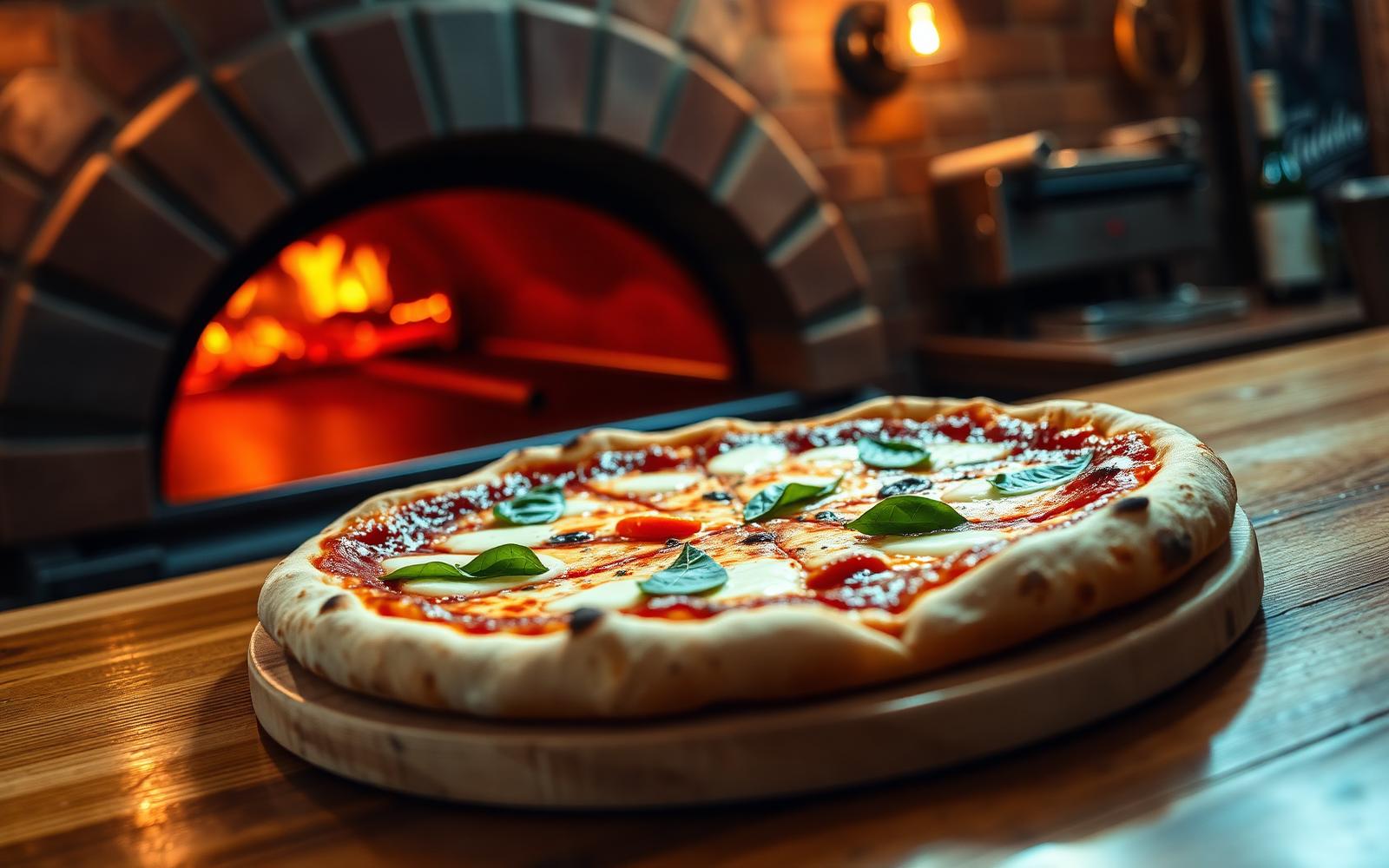
A Neapolitan pizza is a sixty-second argument for restraint in cooking. Flour, water, salt, yeast, San Marzano tomatoes, fior di latte or buffalo mozzarella, a leaf of basil, olive oil, fire. The dough has rested for at least twenty-four hours. The oven is at 485°C. The pizzaiolo turns the disc once with a peel and pulls it out. You eat it within four minutes, folded into quarters — a libretto — with your hands. Anything more elaborate is a different food, made elsewhere, by people who have not yet understood the lesson Naples has been quietly teaching for two hundred years.
This is a one-week pilgrimage through the pizzerias of Centro Storico and the Spanish Quarter — the two neighbourhoods that hold roughly forty of the pizzerias serious enough to count. The point is not to eat at all of them. The point is to eat at the same two or three twice, on different days, at different hours, until you can tell a good Margherita from a great one in your sleep.
In this story
- What 'Vera Pizza Napoletana' actually means
- Centro Storico — the historic centre and the famous names
- The Spanish Quarter — narrower, louder, and where the locals eat
- The two pizzas worth ordering (and the one you should skip)
- How to handle the queue at Da Michele and Sorbillo without losing the day
- The walking pilgrimage: a five-day itinerary
- A practical block: hours, queues, and the right neighbourhood to sleep in
What 'Vera Pizza Napoletana' actually means
The Associazione Verace Pizza Napoletana (AVPN) certifies pizzerias that follow a written specification — dough ingredients, fermentation time, oven temperature, hand-shaping, sixty- to ninety-second bake. The disc must be soft, slightly wet in the centre, with a puffed cornicione blistered black in places. If you can pick a Naples pizza up flat without it sagging, it is not Neapolitan. The AVPN list is not exhaustive — many of the best pizzerias never bothered to certify — but it is a useful starting filter.
Centro Storico
The atmosphere
The historic centre — Via dei Tribunali, Via San Biagio dei Librai, Via Toledo — is where the famous names are. L'Antica Pizzeria da Michele, Sorbillo, Di Matteo, Starita, Pizzaria Brandi (where the Margherita was named in 1889). All are crowded. All are worth eating at once. Most regulars then quietly return to one or two and ignore the rest.
The good
- Da Michele on Via Cesare Sersale — two pizzas only (Margherita, Marinara), €6 each, perfect
- Sorbillo (the original, Via dei Tribunali) — bigger menu, longer queue, equally serious
- Di Matteo a few doors down — quieter, equally good, frequented by locals
- All within fifteen minutes walking of each other
The bad
- Da Michele queues run 90 minutes at 13:00; the trick is to arrive at 11:30 or 19:00 sharp
- Sorbillo now has a takeaway window — fine, but a fried pizza or a tavola calda meal is a better street option
- Via dei Tribunali after 22:00 becomes a bar street — eat earlier
The Spanish Quarter (Quartieri Spagnoli)
The atmosphere
Narrow streets cut into the hillside above Via Toledo, laundry between balconies, scooters that should not fit. The pizza here is less famous, equally good, and served in rooms where most of the conversation is in dialect. This is the neighbourhood for the second and third lunch of the week, when the famous-name list is finished and the real eating begins.
The good
- La Notizia (Enzo Coccia, technically Vomero but his Quartieri spirit defines a generation of pizzaioli)
- Concettina ai Tre Santi (Ciro Oliva) — Sanità just north, a slow walk uphill, one of the great young kitchens in Italy
- 50 Kalò (in Mergellina, twenty minutes by Metro) — the chef Ciro Salvo's room, technically perfect dough
- Smaller neighbourhood rooms like Da Attilio (carnevale-shaped pizza) and Pizzeria Vesi
The bad
- Hotels in the Spanish Quarter run loud and small — sleep one neighbourhood over, in Chiaia or near Piazza Bellini
- Some rooms close on Sunday or Monday; check before walking thirty minutes
- Most Spanish Quarter pizzerias do not take cards under €20 — carry small notes
The two pizzas worth ordering
- Margherita — the test pizza. If this is not extraordinary, nothing else will be
- Marinara — tomato, garlic, oregano, olive oil. No cheese. The pizza for serious people, and the one most tourists skip
Skip the speciality pizzas with truffle oil, prosciutto crudo piled high, rocket, balsamic glaze. They are competently made and irrelevant. A week of Margherita and Marinara at three or four different pizzerias will teach you more about Italian cooking than a year of degustazione menus elsewhere.
The walking pilgrimage: a five-day itinerary
- Day 1, lunch — Da Michele. Eat two pizzas. Walk down to the seafront and sleep
- Day 2, lunch — Di Matteo. Marinara plus a fritto misto. Afternoon at Cappella Sansevero
- Day 3, lunch — Concettina ai Tre Santi (Sanità). Walk the catacombs of San Gennaro afterwards
- Day 4, lunch — Pizzeria Starita. Evening walk through the Spanish Quarter, gelato at Casa Infante
- Day 5, lunch — 50 Kalò in Mergellina, then a long slow espresso at Gran Caffè Gambrinus before the train
A practical block
- Lunch service generally runs 12:30–15:30; dinner from 19:30. Arriving at the start of service avoids the worst queues
- No reservations at most classic rooms; reservations possible at Sorbillo, 50 Kalò, Concettina
- Carry €40–60 cash per day; some rooms still do not accept cards
- Sleep in Chiaia, near Piazza dei Martiri, or near Piazza Bellini — quieter and well-connected
- Wear shoes you do not mind ruining; the Spanish Quarter cobbles are not kind
- Avoid weekends in August; the city empties and many family pizzerias close
How long to stay
Five nights is the honest minimum for a real pizza week. Three nights forces you to eat three lunches in a row and risk pizza fatigue; a week lets you intersperse the museums (MANN, Capodimonte), the islands (Procida over Capri, every time), and the slow rituals that justify the trip — coffee at the bar standing up, sfogliatella from Scaturchio, an evening walk along the Lungomare.
Questions, answered
Frequently asked
Is Da Michele really worth the queue?
Yes, once. The Margherita is genuinely extraordinary and the Marinara is the better order. After that, Di Matteo across town does the same dish without the wait.
Centro Storico or Spanish Quarter — which is better?
Both. Centro Storico has the famous names you should see once. The Spanish Quarter and Sanità hold the rooms you will return to. Plan three days in the centre and two in the surrounding neighbourhoods.
Should I bother with truffle pizzas or speciality toppings?
No. The pizzaiolo's craft is in the dough and the wood-fire bake. A Margherita or Marinara reveals the kitchen; a quattro stagioni hides it.
Is Naples safe at night for a slow walker?
Centro Storico and Chiaia are fine until late. The deeper Spanish Quarter and Sanità streets are best walked before 22:00. Take the obvious precautions — phone in pocket, small bag in front — and you will be fine.
How long should the pizza pilgrimage take?
Five nights. One lunch per day, no double-pizza days, and time between meals to walk, look at art, and sit with espresso. Compress it to three days and you will stop tasting the difference between rooms by day two.
Conversation
Be the first to comment
Comments are reviewed automatically before they appear. Please keep it respectful.
Loading comments…