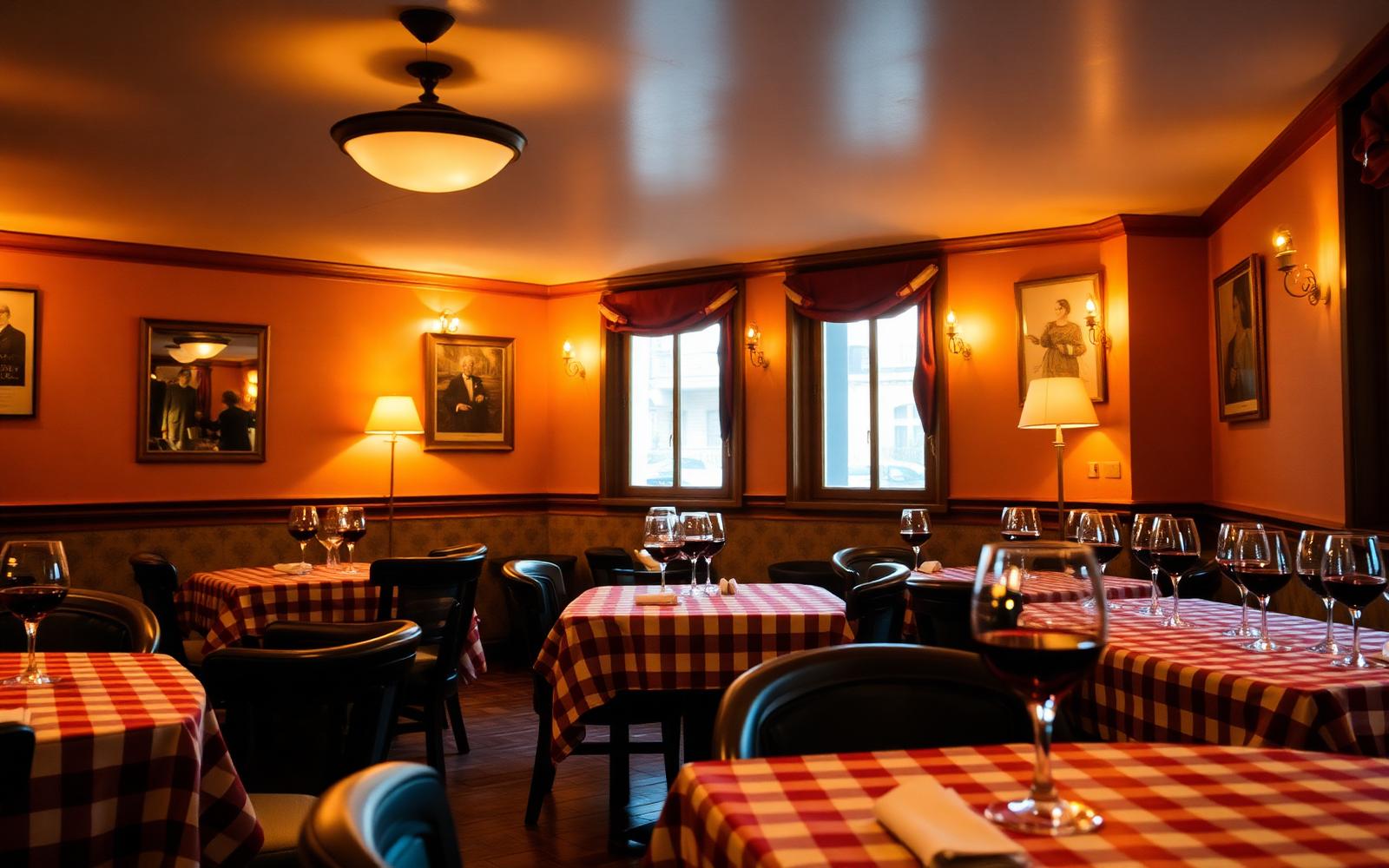
A bouchon is not a restaurant in the modern sense. It is a small, family-run room — often a single room — that serves a fixed set of Lyonnais dishes that have not changed in fifty years: salade de gésiers, quenelles de brochet, andouillette, tablier de sapeur, cervelle de canut. The food is honest, generous, and largely unphotogenic. The wine is a Beaujolais from a producer the owner trusts. The bill is reasonable. There were once about three hundred of them in Lyon. Today there are roughly twenty that the locals will actually defend, and a much larger number trading on the name.
This is a slow, opinionated guide to the bouchons that are still doing the work — concentrated in two neighbourhoods, Vieux Lyon on the right bank of the Saône and Croix-Rousse on the hill above the Rhône. The aim is to leave you with enough specificity to walk in, sit down, eat properly, and leave understanding why this small civic project still matters.
In this story
- Why the bouchon almost disappeared, and why it came back
- Vieux Lyon — the medieval quarter and its tourist trap problem
- Croix-Rousse — the silk weavers' hill and the working bouchons
- How to read a real bouchon menu in 30 seconds
- The five dishes you should actually order
- Lunch is the meal here — and why dinner is the worse option
- A short list of names worth booking
Why the bouchon almost disappeared
The bouchon emerged in the nineteenth century from the mères lyonnaises — the female cooks who left the kitchens of bourgeois households and set up small eating-rooms for the silk workers. By the 1990s most had closed: the children did not want the hours, the silk industry was long gone, and the tourist version (red checkered cloth, English menu, frozen quenelle) was easier to run. The revival of the last decade is the work of a small group of younger cooks who took over their parents' or grandparents' rooms and committed, in writing, to the dishes and the suppliers. The Association des Bouchons Lyonnais now certifies about twenty rooms. The certification is the easiest filter you have.
Vieux Lyon
The atmosphere
Cobbled streets, Renaissance courtyards, and the highest density of tourist menus in the city. Vieux Lyon is genuinely beautiful and genuinely dangerous if you walk in hungry without a name. Roughly nine out of ten rooms on the main streets — Rue Saint-Jean, Rue du Bœuf — are tourist bouchons trading on the appearance of the real thing.
The good
- Daniel et Denise Saint-Jean (Joseph Viola, MOF) — the most reliable bouchon in the quarter, lunch menu around €25
- Le Café des Fédérations on Rue Major Martin (a short walk into Presqu'île) — old-school, communal, lunch is the move
- A handful of certified rooms tucked one street back from the main pedestrian flow
The bad
- Photo menus in five languages — walk past
- Quenelles served with reheated béchamel — visible if you can see the kitchen
- Wine sold by the glass at €9 in a city where the carafe of Beaujolais should be €12 for three glasses
Croix-Rousse
The atmosphere
The hill above the city centre — once the silk workers' quarter, with the tall windows that the looms needed — is now the most lived-in neighbourhood for serious eaters. The Tuesday and Saturday market on the Boulevard de la Croix-Rousse is one of the great urban markets of France. The bouchons here serve the people who shop at it.
The good
- Le Canut et les Gones — modern bouchon doing the classics with restraint, lunch around €22
- Café Comptoir Abel (technically Presqu'île but spiritually Croix-Rousse) — wood, brass, no nonsense
- Bistrot des Maquignons higher up the hill — small, loud, exactly right
- Wine carafes here usually come from named producers, not the house cellar
The bad
- Most rooms hold fewer than thirty seats — reserve two to three days ahead for lunch
- The hill is a real walk from Vieux Lyon; allow forty minutes on foot or take the funicular and metro
- Closed on Sundays and Mondays almost without exception
How to read a real bouchon menu in thirty seconds
- The menu is short — one page, handwritten or printed once a week
- The same six or seven entrées and plats appear: gésiers, œuf en meurette, quenelle, andouillette, tablier de sapeur, tête de veau
- Prices for the lunch formula sit between €19 and €28; anything above €35 at lunch is no longer a bouchon
- A house carafe (pot lyonnais — 46cl) of Beaujolais or Côtes-du-Rhône is on the menu, around €10–14
- Cervelle de canut and tarte aux pralines appear at dessert — both are real bouchon markers
The five dishes you should actually order
- Salade de gésiers — duck gizzards over warm potato and bitter leaves; a good test of the kitchen
- Quenelle de brochet sauce Nantua — the pike dumpling in shellfish sauce; if it tastes like flour, leave
- Andouillette tirée à la ficelle (the AAAAA-certified version) — pungent, not for everyone, the most honest dish on the menu
- Tablier de sapeur — breaded tripe; the dish that decides whether you really like bouchon food
- Cervelle de canut — fresh cheese with herbs and shallot, eaten with bread, the gentle ending
Lunch is the meal here
Every serious bouchon does its real cooking at lunch. The formula (entrée + plat + dessert) runs €22–28, the dining room is full of local office workers, and you leave at 14:30 with the rest of the afternoon to walk along the Saône. Dinner service is shorter, more expensive, and often more touristic. Treat dinner as the lighter meal — a glass of Saint-Joseph and a charcuterie plate at a wine bar like Le Bouchon des Filles or the brilliant Le Comptoir des Cousins.
A short practical block
- Reserve every bouchon two to three days ahead by phone; many do not take online bookings
- Cash is welcome and sometimes preferred at the older rooms — carry €60–80
- Closed Sunday and Monday at almost every certified bouchon; plan your arrival around Tuesday lunch
- The Tuesday and Saturday morning Croix-Rousse market is worth a slow hour before lunch
- Skip the rooms on Rue Saint-Jean with menus in the window — none are good
- Two bouchons a day is the maximum any honest eater can manage; one is plenty
How long to stay, and how to leave
Three nights is the right length for Lyon. One day for Vieux Lyon and the Fourvière hill, one for Croix-Rousse and the market, one for the Presqu'île and the Confluence. Three lunches, three quiet dinners at wine bars, two long walks along the river. Anything shorter forces you to choose between the bouchons and the museums; anything longer begins to expose Lyon's quiet provincial bones, which is itself an argument for coming back.
Questions, answered
Frequently asked
What actually makes a bouchon a bouchon?
A short, fixed menu of Lyonnais classics, a house carafe of Beaujolais, family ownership, and a dining room that prioritises locals at lunch. The Association des Bouchons Lyonnais certifies about twenty rooms; the certification is your most reliable filter.
Vieux Lyon or Croix-Rousse — which is better for food?
Croix-Rousse, by some distance, if you are eating with locals. Vieux Lyon has two or three excellent rooms surrounded by tourist traps. If you only have one lunch, go to Croix-Rousse on a Tuesday after the market.
Do I need to reserve?
Yes, two to three days ahead by phone for lunch at any certified bouchon. The rooms are small — twenty to forty seats — and the lunch service fills with regulars.
Is andouillette really worth ordering?
It is the most divisive dish on the menu. If you eat offal at all, the AAAAA-certified version is a genuine experience. If you do not, order the quenelle instead — also classic, much gentler.
How many days should I spend in Lyon?
Three nights is the honest sweet spot. Enough for three lunches, the Croix-Rousse market, both old quarters, and a long evening walk along the Saône.
Conversation
Be the first to comment
Comments are reviewed automatically before they appear. Please keep it respectful.
Loading comments…