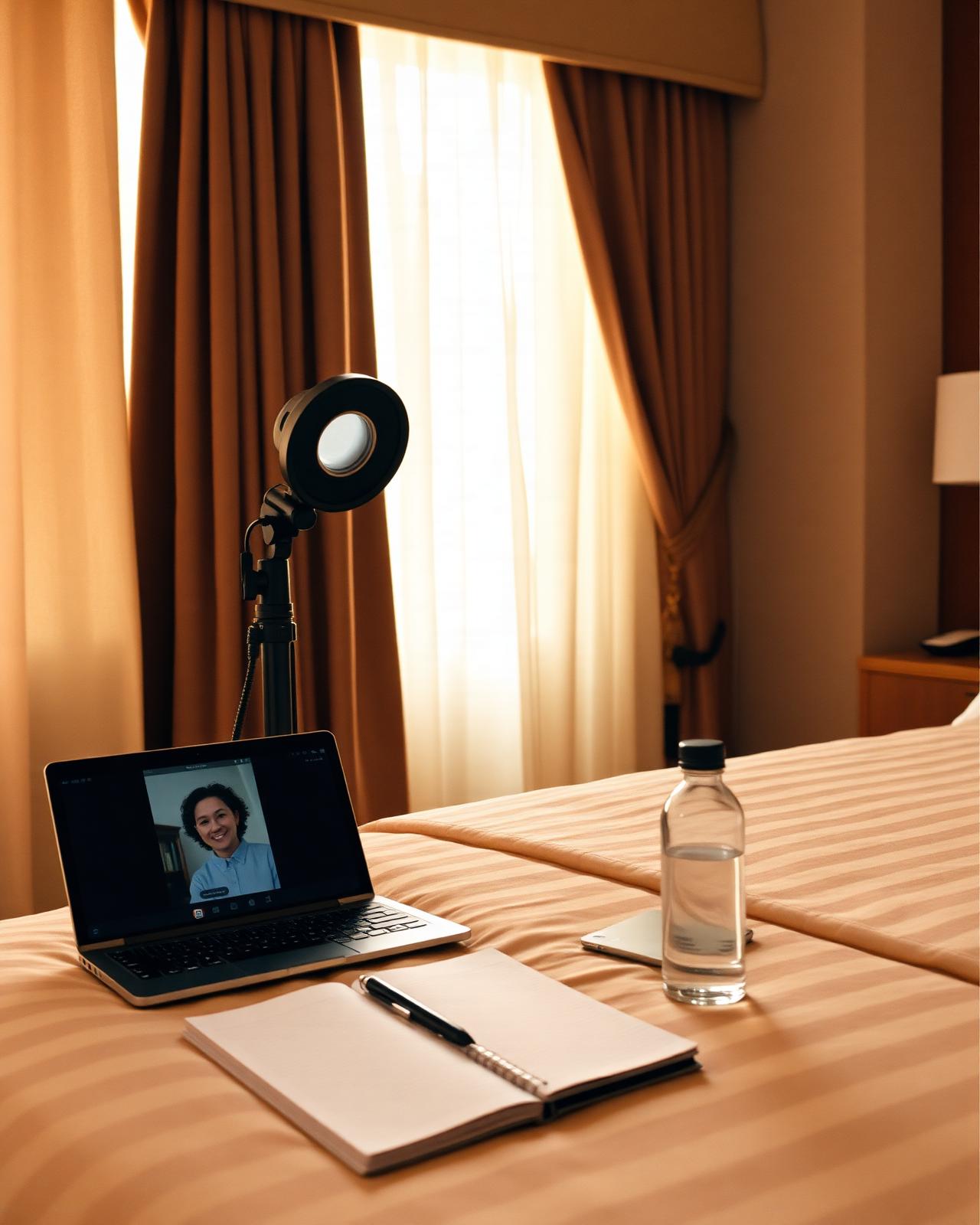
Composure on a video call is mostly a function of the ten minutes before it. Almost every disaster — the echo, the silhouette, the dropped connection, the colleague suddenly visible in the background — has its roots in a location chosen too late. Below are the five places remote workers actually take calls from on the road, with what each one is good for and what it quietly punishes.
In this story
- The hotel room: the most reliable, if you set it up properly
- The coworking phone booth: short calls, sometimes too short
- The café: presentable, rarely professional
- The airport lounge: workable for half an hour, dangerous after
- The train: only with warning, and only some trains
- The ten-minute pre-call ritual
- Lighting, audio, and the backup plan
The hotel room
The atmosphere
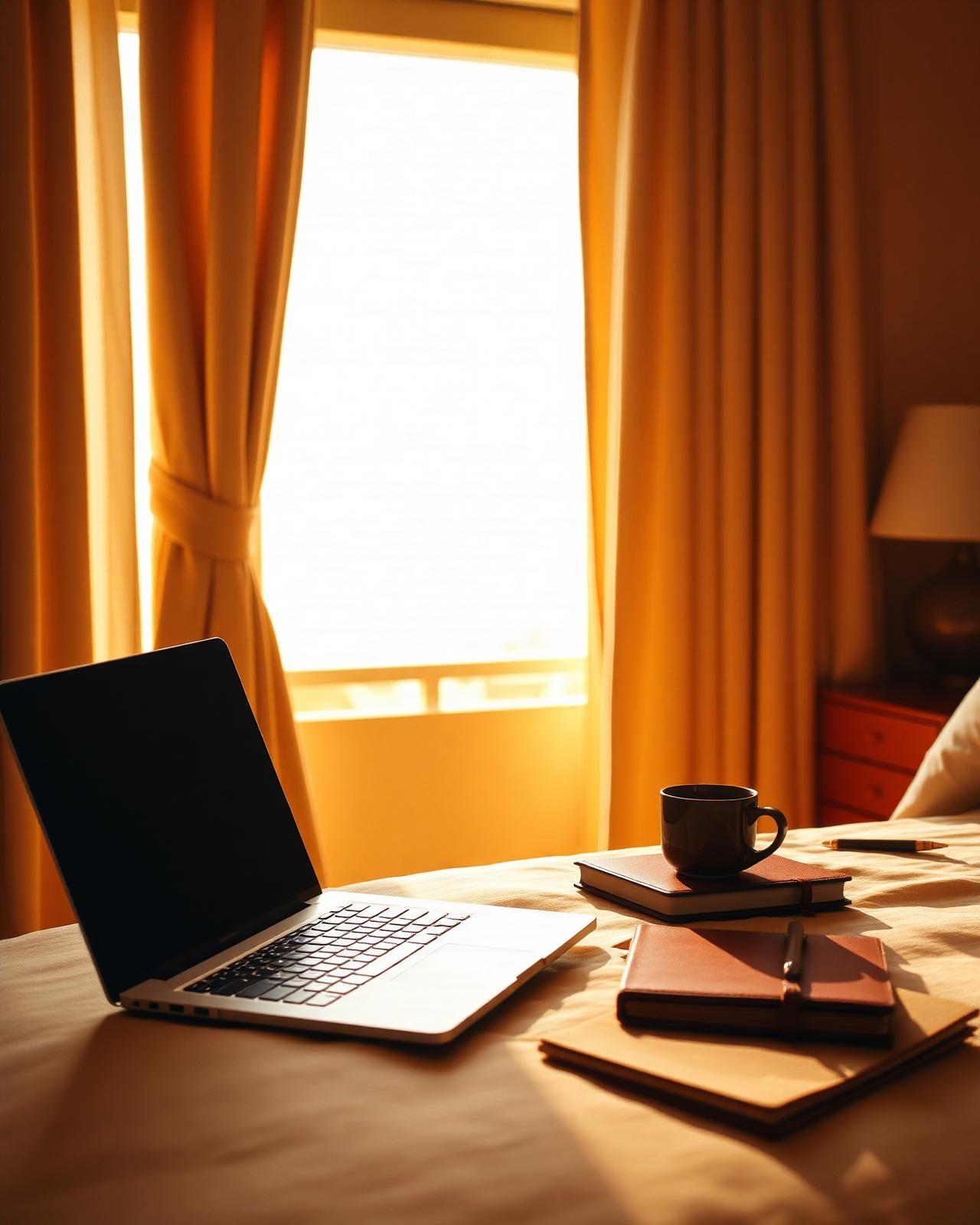
Curtains closed, lamp on, door locked, do-not-disturb sign hanging. The hotel room is the most consistent video-call studio available to a traveler — but only if the desk faces a window and the Wi-Fi has already been tested.
The good
- Quiet, controllable, and easy to reset between calls.
- Predictable background; no surprise colleagues, baristas, or hotel guests.
- Charger, water, and notes within arm's reach.
The bad
- Cheaper rooms put the bed behind you, which reads as casual on camera.
- Hotel Wi-Fi can hold a call until the moment screen-share begins.
- Housekeeping has no idea you are on a call unless the sign is on the door.
The coworking phone booth
The atmosphere
A small acoustically-treated box with one chair, one desk, and ventilation that almost works. Modern coworking spaces typically have several of these and they are the right answer for one-on-one calls of less than thirty minutes.
The good
- Excellent audio isolation and consistent neutral background.
- Strong, stable Wi-Fi engineered for many simultaneous calls.
- No housekeeping, no neighbours, no unexpected noise.
The bad
- Often hot and airless after twenty minutes; long calls become physically uncomfortable.
- Frequently fully booked at popular hours; arrive earlier than the call.
- Lighting is usually harsh overhead — bring a small clip-on lamp or face a window booth.
The café
The atmosphere
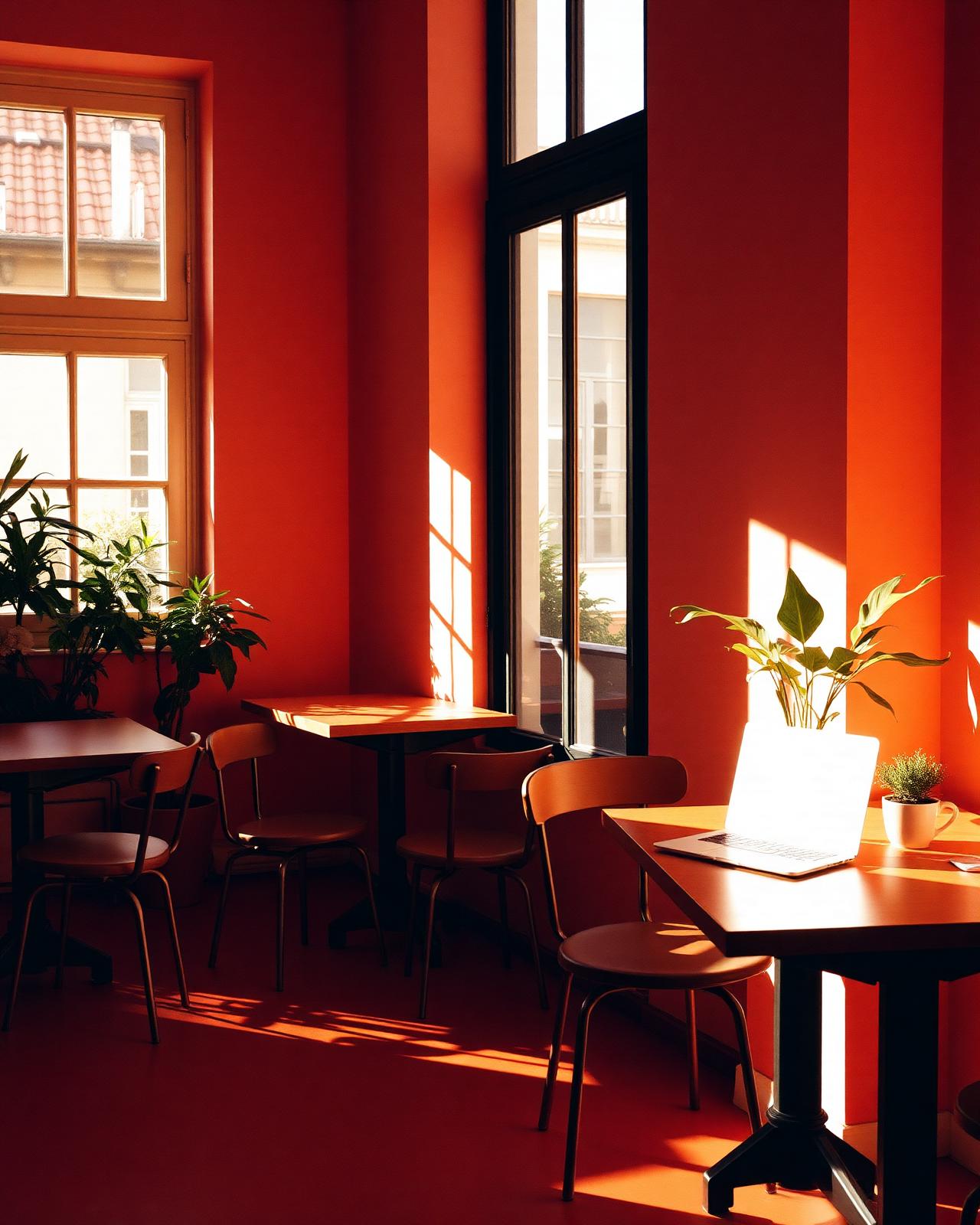
Music, conversation, the periodic shriek of a steam wand. Cafés are almost universally over-romanticised as remote-work venues. They are fine for solo focus with headphones; they are rarely fine for client video calls.
The good
- Easy to leave if the connection fails.
- Acceptable for short internal calls between colleagues who already know each other.
- Sometimes the only available option in an emergency.
The bad
- Audio bleed is brutal: even good microphones pick up surrounding conversations.
- Wi-Fi is shared with everyone else in the room and degrades during peak hours.
- Other customers do not know they are on camera, which is a real privacy issue.
The airport lounge
The atmosphere
Soft lighting, decent seating, and the constant low murmur of boarding announcements. Lounges are workable for short, low-stakes calls; they should never host a client meeting that matters.
The good
- Reliable power and free water.
- Better Wi-Fi than the public terminal.
- Comfortable enough for thirty to forty-five minutes of seated work.
The bad
- Public address announcements will interrupt every important sentence.
- Other passengers walking behind you create a visually noisy background.
- Wi-Fi often disconnects when you change zones inside the lounge.
The train
The atmosphere
Beautiful countryside, dramatic light, and a connection that disappears every time the train enters a tunnel. Calls from trains can be done well only on routes you already know, only in designated quiet workspaces, and only with a warning at the start.
The good
- Newer European trains often have stable 4G connectivity outside tunnels.
- Workspace carriages on some routes (e.g. SNCF, SBB) are quiet and have power.
- Predictable journey times make scheduling possible.
The bad
- Tunnel sections will drop the call; warn colleagues at the start.
- Background view changes constantly and reads as inattentive on camera.
- Other passengers can hear everything you say, which compromises any confidential meeting.
The ten-minute pre-call ritual
Whatever the location, the same short sequence works: ten minutes before the call, close the door or move seats, place the laptop at eye height, face a window or a single warm lamp, mute notifications, pour water, and join the platform a full minute early to test mic and camera. The first thirty seconds of any call should not be spent troubleshooting your own setup.
Lighting, audio, and the backup plan
Light comes from the front, never from behind. Audio comes from headphones with a known microphone, never from laptop speakers. Wi-Fi is tested before the call begins and a mobile hotspot is already configured as a backup. A one-sentence backup plan — 'if my Wi-Fi fails I'll dial back in by phone within sixty seconds' — turns a potential disaster into a footnote.
Quick checklist for any call on the road
- Quality wired or stable wireless headphones with a known microphone
- Clip-on or USB microphone for longer or higher-stakes calls
- One soft lamp or known window position for warm, front-facing light
- Neutral wall or fabric square as a reliable background
- Backup mobile hotspot tested before the call
- Charger plugged in for any meeting over thirty minutes
Essential carry-on setup
- Headphones with proven microphone quality
- Short USB cable for tethering to phone if Wi-Fi fails
- Small fabric square for an instant clean background
- Laptop stand or stack of books for screen height
- One smart shirt or jacket within reach of every workstation
Recommended bag size
Almost nothing. A laptop, headphones with a real microphone, a small clip-on lamp or known window-positioning plan, and a neutral fabric square to drape over a chaotic background. Anything heavier is theatre.
Common mistakes to avoid
- Joining a call from a moving train or noisy lobby without warning
- Backlighting yourself with a window and becoming a silhouette
- Using laptop speakers and creating echo for everyone else
- Letting personal items appear in frame during client meetings
How to make it feel premium
Premium video presence is quiet. No echo, no harsh light, no notification bells, no apology for the background. Just a person, audible and present, in a room that is not asking for attention.
Questions, answered
Frequently asked
What is the most professional location for a client video call on the road?
A hotel room with a tested Wi-Fi connection, a closed door, and front-facing window light. The coworking phone booth is a close second for calls under thirty minutes.
Can I take a serious client call from a café?
Almost never. The audio bleed alone makes you sound unprofessional, and other customers have not consented to being on camera. Use a café for solo focus with headphones, not for meetings that matter.
What is the single most overlooked detail in remote video calls?
Lighting from the front. A traveler who lights themselves well from a $10 lamp will read as more composed than one with a $300 microphone backlit by a window.
How do I prepare for unreliable Wi-Fi?
Test the connection on the actual call platform an hour before, have a mobile hotspot ready, and share a one-sentence backup plan at the start of the call so a dropped connection becomes a small interruption, not a crisis.
Conversation
Be the first to comment
Comments are reviewed automatically before they appear. Please keep it respectful.
Loading comments…